

Many people assume the best music to test headphones must be audiophile jazz or elaborate classical recordings. In practice, familiar songs with clear vocals, deep bass, sharp transients, and layered arrangements reveal far more about everyday listening.
This comparison covers cables, earbuds, adapters, splitters, and translation earbuds, so you can judge how each option fits your setup. Keep reading for practical buying guidance before you press play.
Key Takeaways
- Choose a cable or adapter with the correct connector type, especially if your phone lacks a 3.5mm headphone jack.
- Check the listed length and cable construction, since braided jackets and right-angle plugs can improve daily durability and handling.
- Prioritize stereo compatibility and signal support for music, rather than assuming every audio accessory delivers the same listening experience.
- Select earbuds with a built-in microphone and remote if you need calls, volume control, or playback commands.
- Confirm device compatibility, certification, and included quantity before buying, particularly for Apple devices, USB-C equipment, and headphone splitters.
| Studio Connection |  |
Braided 3.5mm to 1/4-Inch Cable | 3.5mm to 1/4-inch connection | Long 6.6-foot reach | Braided outer jacket | View on Amazon | Read Review |
| Everyday Earbud Pair |  |
Sanluba Wired Earbuds With Remote | Built-in microphone | Music and call controls | Two earbuds included | View on Amazon | Read Review |
| Modern Device Link | 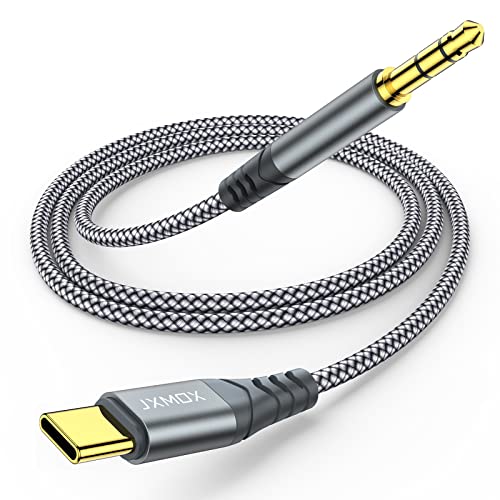 |
JXMOX USB-C to 3.5mm Cable | Connects USB-C devices | Useful four-foot length | Broad device compatibility | View on Amazon | Read Review |
| Travel Listening Companion |  |
Wooask Open-Ear Translation Earbuds | Open-ear listening design | Bluetooth connectivity | Real-time language translation | View on Amazon | Read Review |
| Spare Cable Value |  |
USB-C to 3.5mm Cable Two-Pack | Two cables included | Compact 3.3-foot length | USB-C device compatibility | View on Amazon | Read Review |
| Certified iPhone Adapter |  |
Apple MFi iPhone Audio Adapter | Apple MFi certified | Supports fast charging | Designed for iPhone audio | View on Amazon | Read Review |
| Durable Car Connection |  |
Nanxudyj Right-Angle AUX Cable | Right-angle connector | Six-foot reach | Nylon-braided exterior | View on Amazon | Read Review |
| Shared Listening Adapter | 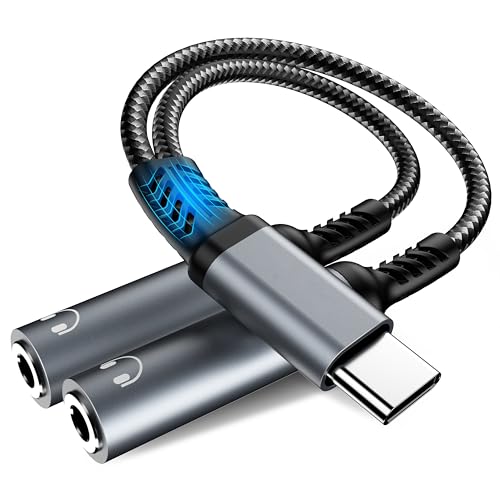 |
USB-C Dual Headphone Splitter | Two headphone outputs | USB-C source connection | Listed Hi-Res support | View on Amazon | Read Review |
| Purpose Unclear |  |
Headphone Hearing Test | Hearing-related listing | Potential examination use | Compact concept | View on Amazon | Read Review |
More Details on Our Top Picks
-
Braided 3.5mm to 1/4-Inch Cable
For headphone listening setups with a 1/4-inch input, this cable is the most practical pick in the roundup. It connects standard 3.5mm sources to equipment such as headphone amplifiers, receivers, mixers, and some audio interfaces.
The 6.6-foot length gives you useful room to move, while the braided exterior should help with everyday handling. Its main limitation is simple: it is a cable, not a pair of headphones, and the listing does not provide details about shielding or connector plating.
- Type:Stereo TRS cable
- Connector:3.5mm to 1/4-inch
- Length:6.6 feet
- Material:Braided exterior
- Additional Feature:Bidirectional signal support
- Additional Feature:Suitable for headphone amplifiers
- Additional Feature:Works with stereo audio equipment
-
Sanluba Wired Earbuds With Remote
Choose these if you want simple wired earbuds for comparing familiar music tracks without Bluetooth pairing or battery management. The built-in remote supports music control, volume adjustment, and phone calls, making the pair useful for phones, laptops, and desktop computers.
The two-pack gives you a spare set or a second pair for another listening location. However, the listing does not identify driver size, frequency response, ear-tip options, or cable length, so detailed sound comparisons are limited.
- Type:Wired earbuds
- Connector:3.5mm plug
- Count:2-pack
- Additional Feature:Volume control
- Additional Feature:Remote music control
- Additional Feature:Compatible with phones and computers
-
JXMOX USB-C to 3.5mm Cable
This cable fits a USB-C source that lacks a traditional headphone jack, including many newer phones, tablets, and computers. It can connect that device to wired headphones, car stereos, or other equipment with a 3.5mm input.
The 4-foot length is practical for desk and vehicle use without leaving excessive slack. Compatibility can vary by device, and the listing does not explain its internal digital-to-analog converter, so audio performance depends partly on the cable’s built-in circuitry and source device.
- Brand:JXMOX
- Type:USB-C audio cable
- Connector:USB-C to 3.5mm
- Length:4 feet
- Additional Feature:Supports headphone connections
- Additional Feature:Works with car stereos
- Additional Feature:Listed for iPhone and Galaxy devices
-
Wooask Open-Ear Translation Earbuds
These earbuds suit listeners who want music, calls, and translation in one Bluetooth device. The open-ear design lets outside sound remain audible, which can help during travel or conversations, though it may be less suitable for critical headphone comparisons in noisy spaces.
The listing claims real-time translation across 144 languages and includes a three-in-one design. Open-ear audio usually provides less isolation than sealed earbuds, so bass impact and fine musical detail may not match what you hear from conventional closed-back headphones.
- Brand:Wooask
- Type:Bluetooth earbuds
- Count:Pair
- Additional Feature:Supports 144 languages
- Additional Feature:Designed for calls
- Additional Feature:Translation and music modes
-
USB-C to 3.5mm Cable Two-Pack
A useful choice for keeping two wired listening setups connected, such as headphones at a desk and an aux connection in a car. The USB-C to 3.5mm format supports newer phones and tablets that omit a built-in headphone jack.
The 3.3-foot length keeps the cable compact and less prone to tangling, while the two-pack provides a convenient spare. The listing does not state whether the cable includes a digital-to-analog converter or supports in-line microphone controls, so those functions should not be assumed.
- Type:USB-C audio cable
- Connector:USB-C to 3.5mm
- Length:3.3 feet
- Count:2-pack
- Additional Feature:Suitable for car stereos
- Additional Feature:Supports wired headphones
- Additional Feature:Listed for iPhone and Pixel devices
-
Apple MFi iPhone Audio Adapter
This adapter is aimed at iPhone users who need wired audio while preserving access to fast charging. Apple MFi certification indicates that the accessory is designed to meet Apple’s compatibility requirements, which is useful for a dependable connection to wired headphones.
Its main advantage is combining audio and charging access in one small accessory. The listing does not specify the connector layout, cable length, supported iPhone generations, or microphone controls, so check those details before matching it with a particular phone or headset.
- Brand:Apple MFi certified
- Type:Audio charging adapter
- Additional Feature:Combines audio and charging
- Additional Feature:Designed for wired headphones
- Additional Feature:Supports iPhone connections
-
Nanxudyj Right-Angle AUX Cable
This AUX cable works well for connecting phones, headphones, speakers, consoles, and PCs with standard 3.5mm ports. The right-angle plug can reduce strain where a straight connector would press against a phone, controller, or vehicle console.
The 6-foot reach gives you flexibility in a car or living-room setup, and the nylon-braided jacket is suited to regular handling. As with any passive AUX cable, it cannot add wireless features, volume controls, or sound processing to connected equipment.
- Brand:Nanxudyj
- Type:Stereo AUX cable
- Connector:Male-to-male 3.5mm
- Length:6 feet
- Material:Nylon braid
- Additional Feature:Hi-Fi stereo signal
- Additional Feature:Compatible with game consoles
- Additional Feature:Portable cable design
-
USB-C Dual Headphone Splitter
Use this adapter when two people need to hear one source through separate wired headphones. It connects to a USB-C device and provides two 3.5mm headphone outputs, making it useful for shared music, travel, or side-by-side listening.
The dual-output layout is its clear strength, and the listing also identifies Hi-Res audio support. Still, USB-C audio compatibility can vary by device, and the product does not state whether both outputs support microphones, independent volume control, or charging passthrough.
- Type:Headphone splitter
- Connector:USB-C to dual 3.5mm
- Count:Two audio outputs
- Additional Feature:Supports shared listening
- Additional Feature:Works with tablets and phones
- Additional Feature:Designed for wired headphones
-
Headphone Hearing Test
The title suggests a hearing examination accessory or service, but it does not identify a recognizable brand, product type, connector, or operating method. Because the listing information is so limited, you should not treat it as a dependable tool for evaluating headphone sound quality or personal hearing.
Its only apparent use is as a possible hearing-related resource, not as music playback equipment. Without details about calibration, frequency coverage, instructions, or included hardware, there is not enough information to recommend it for a serious headphone roundup.
- Type:Hearing test listing
- Additional Feature:Product purpose is unclear
- Additional Feature:No connector details provided
- Additional Feature:No technical specifications listed
Frequently Asked Questions
How many songs should you use to assess headphones?
Start with six to ten tracks that cover bass, vocals, treble, dynamics, and spatial detail. That is enough variety to reveal a clear pattern without turning the listening session into a small research project. Use familiar recordings first, then add one or two well-produced reference tracks for confirmation. Consistency matters more than playlist length.
Which music genres work best for headphone comparisons?
No single genre covers every strength, so build a mixed playlist. Use electronic or hip-hop for bass, acoustic or vocal music for mids, jazz for separation, classical for scale, and rock or pop for treble and overall balance. Choose songs with clean production and instruments you know well. Familiarity gives you a useful baseline, while variety keeps one genre from shaping your entire judgment.
Should you use lossless music?
Lossless files or high-quality streaming settings are preferable for critical listening, particularly with revealing headphones. They preserve more of the recording and reduce the chance that compression artifacts distract from the comparison. Standard streaming quality can still work for casual evaluation, especially if every headphone uses the same source. Keep the source, volume, and playback device consistent so the headphones receive a fair comparison.
What volume is safest for listening?
Keep playback at a comfortable, moderate level, roughly loud enough for clear detail without forcing you to raise your voice over the music. If your ears ring, feel muffled, or seem fatigued, stop listening and lower the volume next time. Short sessions with regular breaks are kinder to your hearing than prolonged loud playback. Detail should remain audible through balance and clarity, not brute force.
Can songs reveal headphone problems better than frequency charts?
Charts show frequency response, but music reveals how that response affects vocals, rhythm, separation, and emotional impact. A measurement can suggest why a headphone sounds bright or bass-heavy, while a familiar song helps you decide whether that character suits your preferences. Use both sources of information. Read the measurements, then listen for practical effects such as masked vocals, piercing cymbals, loose bass, or a cramped stereo image.