

A good closed-back headphone earns its place through a clean seal and balanced sound, not a crowded feature list. Poor fit can turn even impressive audio into a clammy, fatiguing chore, while a well-shaped design keeps music focused and outside noise at arm’s length.
This roundup compares the best closed back headphones under 300 across home listening, studio work, instruments, and everyday use. Keep reading for a clear comparison of the models, their intended roles, and the details that shape daily comfort.
Key Takeaways
- Prioritize a secure, comfortable seal because closed-back cups only isolate well when they sit evenly around your ears.
- Match over-ear or on-ear fit to your listening time, since padding and clamp affect heat, pressure, and fatigue.
- Check the connector and cable before buying, especially if your source uses Lightning, 3.5mm, or 1/4-inch output.
- Treat driver type and size as clues, not guarantees, then weigh tuning and intended use more heavily.
- Confirm open versus closed design, because an open model leaks sound and cannot provide the isolation expected from this category.
| Everyday Isolation |  |
Sennheiser HD 300 Closed-Back | Closed-back listening | Around-ear fit | Familiar Sennheiser tuning | View on Amazon | Read Review |
| Portable Budget Pick |  |
Sony ZX110 On-Ear Wired | Compact portable design | Wired connection | Easy everyday use | View on Amazon | Read Review |
| Planar Detail Specialist |  |
HIFIMAN Sundara Closed-Back | Planar magnetic drivers | Detachable cable | Wood ear cups | View on Amazon | Read Review |
| Flexible Monitoring Tool | 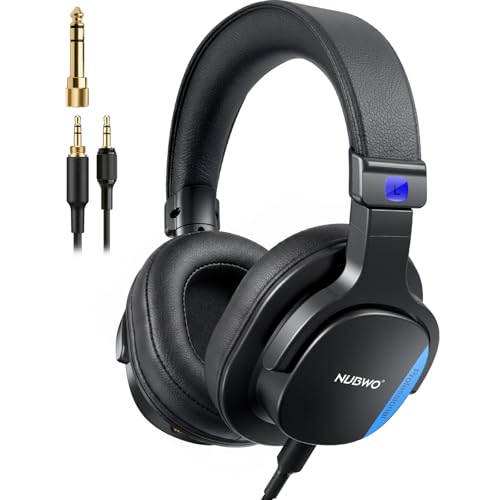 |
NUBWO HD01 Closed-Back Studio | Closed-back monitoring | Includes 1/4-inch adapter | Lightweight over-ear design | View on Amazon | Read Review |
| Spacious Home Listener |  |
Philips Open-Back Over-Ear | Cushioned over-ear fit | Adjustable headband | Spacious open-back design | View on Amazon | Read Review |
| Large-Driver Monitor |  |
Monolith Closed-Back Planar 66mm | 66mm planar driver | Closed-back design | Comfort ear pads | View on Amazon | Read Review |
| iPhone Studio Companion |  |
Thore V200 Lightning Closed-Back | Apple MFi certified | Lightning connection | 50mm neodymium drivers | View on Amazon | Read Review |
| Instrument Monitoring | Philips Studio Over-Ear 6.3mm | Over-ear studio format | Includes 6.3mm adapter | Instrument-friendly connection | View on Amazon | Read Review |
More Details on Our Top Picks
-
Sennheiser HD 300 Closed-Back
The Sennheiser HD 300 is a sensible pick for daily listening, commuting, and office use, especially if you prefer an around-ear fit. Its closed-back design helps keep music focused while limiting some outside noise.
You get a straightforward lightweight-style design with familiar Sennheiser tuning and broad compatibility through its wired format. The main limitation is its conventional build and feature set, so it may feel basic beside newer headphones with detachable cables or wireless controls.
- Brand:Sennheiser
- Headphone Type:Closed-back
- Fit:Around-ear
- Connection:Wired
- Use Case:Daily listening
- Additional Feature:Closed-back construction
- Additional Feature:Around-ear design
- Additional Feature:Black finish
-
Sony ZX110 On-Ear Wired
For simple listening on the move, the Sony ZX110 keeps the formula compact and uncomplicated. Its on-ear design and wired connection suit laptops, phones with headphone jacks, and other everyday devices.
The folding-style portable format is convenient for bags, while Sony’s familiar sound profile makes it a practical entry-level choice. The trade-off is modest isolation and less ear coverage than a true closed-back around-ear model, which can affect comfort during long sessions.
- Brand:Sony
- Headphone Type:On-ear
- Fit:On-ear
- Connection:Wired
- Use Case:Portable listening
- Additional Feature:Folding portable design
- Additional Feature:Black finish
- Additional Feature:Lightweight everyday format
-
HIFIMAN Sundara Closed-Back
Choose the HIFIMAN Sundara Closed-Back for focused home listening, recording, or studio work where planar magnetic drivers are the main attraction. The closed-back construction keeps the presentation more contained, while the over-ear fit supports longer listening sessions.
Its detachable cable, wood ear cups, and Stealth Magnet design give it a more serious hi-fi orientation than basic monitoring headphones. It is less convenient for casual mobile use, however, because its wired design and specialist tuning are better suited to a dedicated listening setup.
- Brand:HIFIMAN
- Headphone Type:Closed-back
- Fit:Over-ear
- Driver Type:Planar magnetic
- Connection:Wired
- Use Case:Home studio
- Additional Feature:Stealth Magnet design
- Additional Feature:Detachable cable
- Additional Feature:Wood ear cups
-
NUBWO HD01 Closed-Back Studio
The NUBWO HD01 fits home recording, instrument practice, and basic studio monitoring, particularly if your setup uses both small and large headphone outputs. Its closed-back monitor design helps concentrate on playback, while the included adapter adds useful connection flexibility.
A lightweight over-ear build should appeal during piano, guitar, amplifier, or mixer sessions, and the Hi-Res labeling points toward detailed playback. Still, it is a practical monitoring model rather than a feature-rich lifestyle headphone, with no wireless convenience or built-in smart controls.
- Brand:NUBWO
- Headphone Type:Closed-back
- Fit:Over-ear
- Connection:Wired
- Use Case:Studio monitoring
- Additional Feature:Hi-Res audio support
- Additional Feature:1/4-inch adapter
- Additional Feature:Lightweight construction
-
Philips Open-Back Over-Ear
The Philips open-back model is aimed at relaxed home listening, podcasts, and use with a TV, stereo, or PC. Its open design can provide a more airy presentation, while the cushioned over-ear construction targets comfort during longer programs or playlists.
This is the clear outlier in a closed-back roundup: open-back earcups allow more sound in and out, so they are a poor match for commuting, shared offices, or recording near a microphone. The adjustable headband is useful, but the design works best in a quiet room where sound leakage is not an issue.
- Brand:Philips
- Headphone Type:Open-back
- Fit:Over-ear
- Connection:Wired
- Use Case:Home listening
- Additional Feature:Cushioned ear cups
- Additional Feature:Adjustable headband
- Additional Feature:TV and PC compatibility
-
Monolith Closed-Back Planar 66mm
The Monolith is built for listeners who want large 66mm planar drivers in a closed-back over-ear format. It makes the most sense for studio work, focused home listening, and setups that can take advantage of a wired headphone connection.
Its 20-ohm impedance is relatively easy to pair with many sources, while the comfort ear pads support longer sessions and the wood option adds visual character. The substantial construction and studio focus may be excessive for casual portable listening, where a lighter, simpler headphone is easier to live with.
- Brand:Monolith
- Headphone Type:Closed-back
- Fit:Over-ear
- Driver Type:Planar magnetic
- Connection:Wired
- Use Case:Studio monitoring
- Additional Feature:20-ohm impedance
- Additional Feature:Two-watt power handling
- Additional Feature:Black or wood finish
-
Thore V200 Lightning Closed-Back
The Thore V200 is tailored to Apple-device listeners who want a direct Lightning connection rather than a separate adapter. Its closed-back over-ear design and 50mm neodymium drivers also suit DJ monitoring, music playback, and casual recording work.
Apple MFi certification supports dependable Lightning compatibility, and the larger ear cups provide more coverage than basic earbuds. The key limitation is device flexibility: Lightning-only connectivity leaves it poorly suited to Android phones, traditional headphone amplifiers, and newer USB-C setups without additional hardware.
- Brand:Thore
- Headphone Type:Closed-back
- Fit:Over-ear
- Driver Type:Neodymium
- Connection:Lightning
- Use Case:DJ monitoring
- Additional Feature:Studio monitor design
- Additional Feature:Closed-back ear cups
- Additional Feature:iPhone compatibility
-
Philips Studio Over-Ear 6.3mm
The Philips studio headset suits basic monitoring tasks involving a computer, keyboard, guitar, or recording setup. Its over-ear form and wired connection keep the focus on reliable playback, while the included 6.3mm adapter makes it easier to connect with studio and instrument equipment.
It is a practical option for podcasts, practice, and home recording, particularly when several source types share one headphone. The listing does not clearly identify a closed-back design, so isolation may be less predictable than with purpose-built closed-back monitors.
- Brand:Philips
- Headphone Type:Wired stereo
- Fit:Over-ear
- Connection:Wired
- Use Case:Studio monitoring
- Additional Feature:6.3mm adapter
- Additional Feature:Computer compatibility
- Additional Feature:Keyboard and guitar use
Frequently Asked Questions
Are closed-back headphones better for everyday listening?
Often, yes. Closed-back headphones provide privacy, reduce outside distractions, and limit sound leakage, so they work well at home, in an office, or during travel. They can sound more intimate than open-back designs, and the ear cups may feel warmer during long sessions. If you value a spacious presentation for critical listening in a quiet room, open-back headphones may suit you better.
Can closed-back headphones work with a phone or laptop?
Most models can, but check the impedance and connector first. Low-impedance wired headphones usually work directly with phones and laptops, while high-impedance models may need a headphone amplifier. Wireless headphones connect through Bluetooth, and many also include a wired mode. If your phone lacks a headphone jack, you may need a USB-C adapter or a model with Bluetooth.
Are wireless headphones under $300 good for gaming?
They can be, particularly if they include a dedicated low-latency mode or a USB wireless transmitter. Standard Bluetooth may create audio delay, which is distracting in competitive games and poorly synchronized with dialogue. Check microphone quality, platform compatibility, and battery life before buying. A wired connection remains the safest option for minimal latency and broad compatibility.
Do closed-back headphones need an amplifier?
Usually not. Many models priced under $300 are designed to reach useful volume from a phone, laptop, or controller, especially if they have low impedance and high sensitivity. An amplifier can still help with demanding headphones or provide cleaner output from a desktop setup. It should not be the first purchase unless your source struggles to produce adequate volume or sounds distorted.
How should closed-back headphones fit?
The ear cups should surround your ears without pressing directly on them, and the headband should rest securely without creating a painful pressure point. A proper ear-cup seal improves bass response and passive noise isolation. Allow a short adjustment period for the headband and cup position, but persistent pain, numbness, or strong jaw pressure signals a poor fit. Comfort is not a minor detail, because even excellent headphones spend most of their life unused if they become uncomfortable after twenty minutes.