

The kick hits, cymbals flare, and suddenly every detail in your mix is fighting for space. Long rehearsals can leave your ears fatigued, while weak isolation makes it harder to hear timing, backing tracks, or a click.
The best headphones for drummers need to balance protection, clear monitoring, comfort, and dependable fit. This comparison brings together studio headphones, isolation models, wireless designs, and in-ear monitors, so keep reading to sort the right style for your setup.
Key Takeaways
- Prioritize passive noise isolation when you need to reduce acoustic drum volume and protect focus during rehearsal.
- Choose closed-back over-ear cups for monitoring, since they limit sound leakage and keep click tracks easier to hear.
- Check driver size and tuning together, because larger drivers do not automatically deliver clearer or more balanced sound.
- Select a secure, comfortable fit with enough padding for long sessions, especially if you rehearse or perform regularly.
- Confirm wired and wireless connections, cable length, and device compatibility before buying for drums, keyboards, computers, or stage use.
| Drum Room Shield |  |
Vic Firth SIH3 Isolation Headphones | Drum-focused isolation | Stereo playback | Over-ear coverage | View on Amazon | Read Review |
| Flexible Studio Workhorse |  |
OneOdio Wired DJ Headphones | Multi-instrument compatibility | Over-ear listening | Wired reliability | View on Amazon | Read Review |
| Studio Detail Specialist |  |
Sony MDR7506 Studio Headphones | Studio monitoring focus | Large diaphragm design | Detailed playback | View on Amazon | Read Review |
| Wireless Practice Guard |  |
Vic Firth Bluetooth Isolation Headphones | Bluetooth convenience | Drum-focused isolation | Wireless practice setup | View on Amazon | Read Review |
| Practical Monitoring Pick |  |
Audio-Technica ATH-M20x Studio Headphones | Studio monitor design | Closed-back format | Reliable wired connection | View on Amazon | Read Review |
| Electronic Kit Companion | 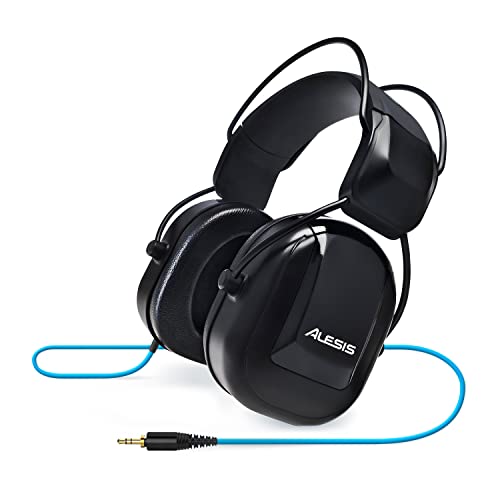 |
Alesis DRP100 Drum Headphones | Built for electric drums | Dedicated monitoring format | Practice-ready design | View on Amazon | Read Review |
| Hybrid Listening All-Rounder |  |
OneOdio A70 Bluetooth Headphones | Bluetooth and wired use | Over-ear DJ design | Flexible listening setup | View on Amazon | Read Review |
| Detachable Cable Monitor |  |
Audio-Technica ATH-M50x Studio Headphones | Professional monitor design | Detachable cable | Closed-back listening | View on Amazon | Read Review |
| Compact Stage Monitor |  |
CCZ Melody Hybrid IEMs | Compact in-ear design | Hybrid driver layout | Secure ear fins | View on Amazon | Read Review |
| Volume-Control Specialist |  |
Superlux HD667 Drummer Headphones | Drummer-focused isolation | Built-in volume control | 40mm drivers | View on Amazon | Read Review |
More Details on Our Top Picks
-
Vic Firth SIH3 Isolation Headphones
Built for drummers first, the SIH3 focuses on stereo sound and passive isolation, helping reduce the volume of acoustic drums while keeping playback audible. That makes it a sensible choice for practice sessions, electronic drums, and rehearsals where hearing protection matters.
The over-ear design should provide useful coverage around the ear, and the dedicated drummer-focused design is its clearest advantage. Its main limitation is simple: wired connectivity offers less freedom of movement than Bluetooth models.
- Brand:Vic Firth
- Type:Isolation headphones
- Connectivity:Wired
- Additional Feature:Passive noise isolation
- Additional Feature:Stereo sound
- Additional Feature:Drum practice design
-
OneOdio Wired DJ Headphones
Choose these if you need one pair for drums, keyboard, guitar, and PC audio. The wired over-ear format suits practice setups where dependable playback matters more than wireless convenience, while the DJ styling points toward a full, engaging presentation.
The broad device compatibility is a practical strength, especially for home studios with several instruments. Still, the listing does not identify a dedicated noise-reduction system, so these are better treated as monitoring headphones than as hearing protection.
- Brand:OneOdio
- Type:DJ headphones
- Connectivity:Wired
- Fit:Over-ear
- Color:Black
- Additional Feature:PC compatibility
- Additional Feature:Keyboard compatibility
- Additional Feature:Guitar compatibility
-
Sony MDR7506 Studio Headphones
The MDR7506 is aimed at studio monitoring, making it a strong fit for drummers who need to hear a click, backing track, or recorded take clearly. Its professional headphone format favors focused listening during practice and production work.
A large diaphragm is designed for full-range audio reproduction, and the established studio orientation gives this model a clear role. The limitation is that it is not marketed as a drum-isolation headset, so it may not reduce acoustic kit volume as effectively as dedicated isolation models.
- Brand:Sony
- Type:Studio headphones
- Driver Size:Large diaphragm
- Connectivity:Wired
- Additional Feature:Professional monitoring design
- Additional Feature:Closed-back style
- Additional Feature:Recording-friendly format
-
Vic Firth Bluetooth Isolation Headphones
This model suits drummers who want Bluetooth playback alongside dedicated isolation hardware. It can fit wireless practice sessions, rehearsal breaks, and electronic drum setups where avoiding a cable is worth the trade-off.
The Vic Firth branding and isolation-focused name make it more purpose-built for drummers than ordinary lifestyle headphones. Wireless operation adds convenience, but Bluetooth introduces battery management and can be less suitable for latency-sensitive playing than a direct wired connection.
- Brand:Vic Firth
- Type:Isolation headphones
- Connectivity:Bluetooth
- Color:Red
- Additional Feature:Passive isolation design
- Additional Feature:Wireless playback
- Additional Feature:Practice-focused construction
-
Audio-Technica ATH-M20x Studio Headphones
The ATH-M20x is a sensible option for home practice and basic studio monitoring, especially if you want a straightforward wired headset for clicks, backing tracks, and recorded drums. Its professional monitor classification gives it a more work-focused role than general-purpose earbuds.
The closed monitoring format can help keep playback concentrated around the ears, while the wired connection avoids battery concerns. It does not carry a dedicated isolation rating, so acoustic drummers should not assume it replaces hearing protection.
- Brand:Audio-Technica
- Type:Studio headphones
- Connectivity:Wired
- Fit:Over-ear
- Color:Black
- Additional Feature:Professional monitoring design
- Additional Feature:Closed-back construction
- Additional Feature:Home studio suitability
-
Alesis DRP100 Drum Headphones
Designed specifically for electric drum sets, the DRP100 is a natural match for electronic drummers who need dedicated monitoring during practice. The focused product category is its main advantage, since the design is intended around drum-module playback rather than general mobile listening.
A dedicated drum headset can simplify an electronic kit setup and keep the sound centered on the player. The trade-off is narrower versatility: this is less compelling if you need Bluetooth or a pair for commuting and everyday music use.
- Brand:Alesis
- Type:Drum headphones
- Connectivity:Wired
- Fit:Over-ear
- Additional Feature:Electric drum compatibility
- Additional Feature:Drum-module monitoring
- Additional Feature:Closed listening format
-
OneOdio A70 Bluetooth Headphones
The A70 fits drummers who want Bluetooth freedom for casual listening but still value a wired connection for studio or instrument work. Its over-ear DJ format makes it suitable for backing tracks, practice sessions, and general music playback.
Having both wireless and wired operation gives this model more flexibility than a cable-only pair. It is not a dedicated isolation headset, however, so acoustic drummers should prioritize hearing protection if the kit volume is high.
- Brand:OneOdio
- Type:DJ headphones
- Connectivity:Bluetooth and wired
- Fit:Over-ear
- Color:Black
- Additional Feature:Hi-Res audio support
- Additional Feature:Wireless playback
- Additional Feature:Wired studio use
-
Audio-Technica ATH-M50x Studio Headphones
The ATH-M50x is suited to drummers who want professional monitoring with a more adaptable cable setup. It works well for recorded practice, studio sessions, and backing-track playback where clear, focused sound is a priority.
Its detachable cable is a meaningful advantage for studio organization and replacement flexibility, while the closed monitor design keeps listening concentrated. Like the ATH-M20x, it is not marketed as hearing protection, so it should not be treated as a substitute for purpose-built drum isolation.
- Brand:Audio-Technica
- Type:Studio headphones
- Connectivity:Wired
- Fit:Over-ear
- Color:Black
- Additional Feature:Detachable cable
- Additional Feature:Hi-Res audio support
- Additional Feature:Studio monitoring format
-
CCZ Melody Hybrid IEMs
These in-ear monitors suit drummers who prefer a compact fit and a more direct connection to a monitor mix. The hybrid 1DD and 1BA driver layout is designed to cover different parts of the frequency range, which can help keep clicks, vocals, and backing tracks distinct.
Ear fins can help maintain a secure fit during movement, and the wired cable avoids wireless latency concerns. The limitation is physical rather than technical: in-ear monitors may feel less comfortable than over-ear headphones during long sessions, and their isolation depends heavily on the ear-tip seal.
- Brand:CCZ
- Type:In-ear monitors
- Driver Size:1DD + 1BA
- Connectivity:Wired
- Fit:In-ear
- Color:Clear black
- Additional Feature:Ear fins
- Additional Feature:4N OFC cable
- Additional Feature:No microphone
-
Superlux HD667 Drummer Headphones
The HD667 is made with drummers in mind, pairing isolation headphones with a built-in volume control. That combination is useful for practice sessions where quick level adjustments are more convenient than reaching for a drum module or mixer.
The 40mm drivers provide a clearly identified hardware specification, while the dedicated drummer positioning gives this pair a focused use case. Its limitation is the wired design, which keeps setup simple but does not provide the freedom of Bluetooth headphones.
- Brand:Superlux
- Type:Isolation headphones
- Driver Size:40mm
- Connectivity:Wired
- Fit:Over-ear
- Additional Feature:Integrated volume control
- Additional Feature:Drum practice design
- Additional Feature:Passive isolation format
Frequently Asked Questions
Are noise-canceling headphones safe for drumming?
Active noise cancellation can reduce steady background noise, but it is not a substitute for hearing protection and may not handle sharp cymbal transients as effectively as strong passive isolation. It can also alter the sound of a click track or electronic drum mix. For acoustic drumming, closed-back headphones with reliable passive attenuation are usually the simpler choice. Keep the playback volume low, because reducing outside noise only helps if you do not replace it with excessive headphone volume.
Should drummers use in-ear monitors or over-ear headphones?
Over-ear headphones generally provide more physical protection from loud cymbals and are easier to put on and remove during practice. They also work well for monitoring electronic drum modules and backing tracks. In-ear monitors can offer excellent isolation and stay out of the way, but fit is more personal, and poor sealing can tempt you to raise the volume. Choose an in-ear system only if it fits securely and has suitable attenuation for your setting.
Do electronic drums need special headphones?
Most electronic drum kits work with ordinary wired headphones that use a 3.5 mm connector, although some modules include a 6.35 mm output or require an adapter. Check the module’s headphone jack, output level, and included documentation before purchasing. Choose headphones with low distortion, clear attack, and enough power handling for the module. Avoid Bluetooth for real-time playing unless the module and headphones use a low-latency system designed for musical monitoring.
How loud should drumming headphones be?
Keep the level only as loud as necessary to hear the click, backing track, or drum mix clearly. A useful guideline is to stay near 85 dBA or lower for extended listening, with shorter exposure at higher levels, and to take quiet breaks during long sessions. If you need to increase the volume to overcome acoustic drums, improve the seal and isolation first. Ringing ears, muffled hearing, or a feeling of pressure after playing are warning signs to stop and lower exposure.
Can regular studio headphones work for acoustic drumming?
Yes, provided they offer strong closed-back isolation, a secure fit, and comfortable padding. Studio headphones are often a good match because they are designed for clear monitoring rather than exaggerated bass or treble. They may not provide the same certified attenuation as dedicated hearing-protection models, so check the published specifications and use sensible volume limits. For loud rehearsals or live performances, combine suitable headphones or monitors with a broader hearing-protection plan.