

What makes headphones work for guitar practice? You need a clear, comfortable listening setup that keeps your playing focused, whether you are shaping tones late at night or refining a part one phrase at a time.
This roundup compares the best headphones for guitar practice across wired, wireless, studio, and DJ-style designs. The details below help you sort through sound, comfort, and connection options before choosing a pair.
Key Takeaways
- Prioritize closed-back ear cups if you need stronger isolation and less sound leakage during guitar practice.
- Choose 50mm drivers for a fuller presentation, but give greater weight to tuning and comfort than size alone.
- Confirm the headphones include both 3.5mm and 6.35mm connections if you switch between phones, computers, mixers, and guitar amplifiers.
- Select flat-response tuning for recording and mixing, while a more colored sound may feel more engaging for casual practice.
- Check clamp pressure, padding, and cable length, since comfort can decide whether a practice session lasts 15 minutes or two hours.
| Flexible Practice Pick |  |
OneOdio Wired DJ Headphones | Wired, dependable connection | Over-ear listening design | Guitar-friendly compatibility | View on Amazon | Read Review |
| Flat Response Specialist |  |
JOYO Monitor Headphones 50mm | Flat monitoring response | Large 50mm drivers | Passive noise isolation | View on Amazon | Read Review |
| Wireless Practice Option |  |
OneOdio A70 Bluetooth Headphones | Bluetooth listening support | Wired Hi-Res mode | Over-ear design | View on Amazon | Read Review |
| Studio Accuracy Staple |  |
Audio-Technica ATH-M20x Monitor | Professional monitoring design | Closed-back sound isolation | 40mm drivers | View on Amazon | Read Review |
| Recording Room Classic |  |
Sony MDR7506 Professional Headphones | Detailed studio monitoring | Large-diaphragm design | Low-latency wired use | View on Amazon | Read Review |
| Direct Amp Connection | 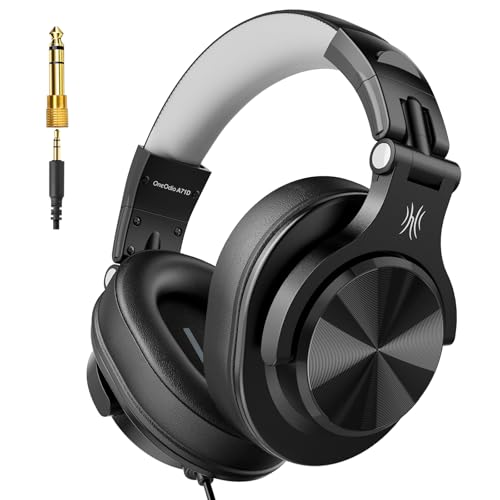 |
OneOdio A71D Wired Headphones | Direct wired connection | Over-ear listening design | Hi-Res audio support | View on Amazon | Read Review |
| Adapter-Ready Monitor | 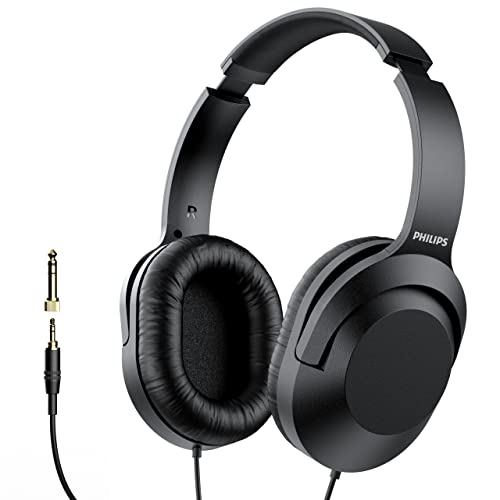 |
Philips Wired Studio Headphones | Broad instrument compatibility | Quarter-inch adapter included | Wired stereo playback | View on Amazon | Read Review |
| Focused Mixing Monitor |  |
OneOdio A71 Hi-Res Headphones | Hi-Res wired playback | Mixing-oriented design | Over-ear ear cups | View on Amazon | Read Review |
| Dual-Jack Value Monitor |  |
PUPGSIS M20 Monitor Headphones | 50mm monitor drivers | Dual-size connection support | Closed-back design | View on Amazon | Read Review |
| Lightweight Amp Companion | 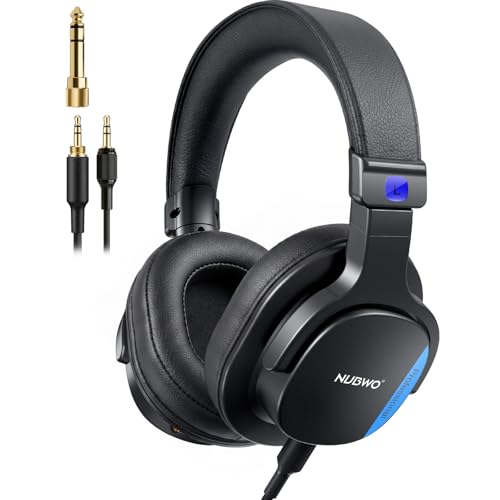 |
NUBWO HD01 Studio Headphones | Lightweight over-ear design | Hi-Res audio support | Quarter-inch adapter included | View on Amazon | Read Review |
More Details on Our Top Picks
-
OneOdio Wired DJ Headphones
For guitarists who want a straightforward practice setup, these wired over-ear headphones pair naturally with a computer, keyboard, or guitar equipment. The DJ-style design should give you a more immersive listening experience than small on-ear models, while the Hi-Res audio support suits detailed guitar tones.
The main advantage is flexibility across common music devices, with no Bluetooth charging routine to interrupt practice. The limitation is equally clear: this is a wired-only model, so it is less convenient for phones or setups that favor wireless listening.
- Brand:OneOdio
- Type:Wired DJ headphones
- Connection:Wired
- Ear Cup Design:Over-ear
- Additional Feature:Hi-Res audio support
- Additional Feature:Computer and keyboard compatibility
- Additional Feature:DJ-style headphone construction
-
JOYO Monitor Headphones 50mm
Choose the JOYO JMH-02 if you want headphones that prioritize flat response for guitar amp work, recording, or mixing. Its 50mm drivers are suited to monitoring applications, while passive noise isolation can help reduce surrounding distractions without electronic noise cancellation.
The dual connection setup is especially useful in a studio, since the included 3.5mm and 6.35mm options cover many amps, interfaces, mixers, and computers. Its limitation is that passive isolation depends on the ear seal and does not provide the adjustable quiet of active noise cancellation.
- Brand:JOYO
- Type:Studio monitor headphones
- Driver Size:50mm
- Connection:3.5mm and 6.35mm
- Ear Cup Design:Over-ear
- Adapter Included:6.35mm adapter
- Additional Feature:Recording and mixing use
- Additional Feature:Guitar amp compatibility
- Additional Feature:Dual-size connection support
-
OneOdio A70 Bluetooth Headphones
The A70 fits guitarists who want Bluetooth convenience for general listening, but still need a wired path for equipment that does not support wireless audio. Its over-ear format and Hi-Res wired mode make it a practical hybrid for moving between casual listening and focused practice.
That flexibility is the key strength, especially if your guitar setup includes a compatible wireless source and your music library lives on a phone or computer. Bluetooth can introduce latency with some musical equipment, so the wired connection remains the safer choice for precise playing.
- Brand:OneOdio
- Type:Bluetooth headphones
- Connection:Bluetooth and wired
- Ear Cup Design:Over-ear
- Additional Feature:DJ-style studio design
- Additional Feature:Black finish
- Additional Feature:Wired listening option
-
Audio-Technica ATH-M20x Monitor
For a guitarist building a more serious monitoring setup, the ATH-M20x offers a professional studio monitor approach rather than a bass-heavy consumer sound. Its closed-back over-ear construction helps keep your practice sound contained, which is useful in shared rooms and recording spaces.
The 40mm drivers and wired format suit amp modeling, interfaces, and computer-based practice. The trade-off is limited mobility: this is a dedicated wired headphone, not a Bluetooth model, and its studio-focused presentation may feel less lively for casual music listening.
- Brand:Audio-Technica
- Type:Studio monitor headphones
- Driver Size:40mm
- Connection:Wired
- Ear Cup Design:Closed-back over-ear
- Additional Feature:Guitar practice compatibility
- Additional Feature:Recording-oriented design
- Additional Feature:Black finish
-
Sony MDR7506 Professional Headphones
The MDR7506 is a strong choice for guitarists who want a familiar professional monitoring headphone for practice, tracking, and editing. Its large-diaphragm design is intended to reveal detail, helping you hear pick attack, string noise, and changes in amp tone.
A wired connection keeps latency out of the signal path, which matters when you are playing along with a modeled amplifier. The limitation is that the closed, studio-focused fit is less suited to wireless listening or people who prefer a roomy, speaker-like presentation.
- Brand:Sony
- Type:Professional headphones
- Driver Size:40mm
- Connection:Wired
- Ear Cup Design:Closed-back
- Adapter Included:6.35mm adapter
- Additional Feature:Recording and mixing use
- Additional Feature:Guitar monitoring suitability
- Additional Feature:Folding headphone construction
-
OneOdio A71D Wired Headphones
The A71D is aimed at guitarists who prefer a simple wired over-ear setup for amp practice, DJ work, or computer audio. Its Hi-Res labeling suggests attention to detailed playback, while the studio headphone format keeps the focus on the signal rather than wireless features.
This model makes sense for a desk, pedalboard, or amplifier station where reliability matters more than portability. Because it is wired only, you will need a separate wireless solution for phone listening or equipment placed across the room.
- Brand:OneOdio
- Type:Wired DJ headphones
- Connection:Wired
- Ear Cup Design:Over-ear
- Additional Feature:Studio headphone format
- Additional Feature:DJ-oriented design
- Additional Feature:Guitar practice compatibility
-
Philips Wired Studio Headphones
Philips gives you a practical option for computer, keyboard, and guitar practice, especially if your gear uses a quarter-inch output. The over-ear stereo design is suited to longer monitoring sessions, while the wired format avoids Bluetooth delay during amp simulation.
The included 6.3mm adapter is the useful detail here, since it lets one headphone connect with common consumer and studio equipment. Its limitation is a lack of wireless freedom, and the listing does not provide enough information to judge driver size or a specific frequency profile.
- Brand:Philips
- Type:Wired studio headphones
- Connection:Wired
- Ear Cup Design:Over-ear
- Adapter Included:6.3mm adapter
- Additional Feature:Podcast monitoring use
- Additional Feature:Recording headset format
- Additional Feature:Keyboard compatibility
-
OneOdio A71 Hi-Res Headphones
The A71 suits guitarists who want a Hi-Res wired headphone for DJ work, mixing, and quiet practice. Its over-ear design should help create a more enclosed listening environment, allowing you to focus on amp models, backing tracks, and recorded parts.
A wired connection keeps the setup direct and predictable, with no battery management or wireless delay to consider. The drawback is its single-purpose wired design, which offers less convenience for everyday mobile listening than the A70 model in this roundup.
- Brand:OneOdio
- Type:Wired studio headphones
- Connection:Wired
- Ear Cup Design:Over-ear
- Additional Feature:DJ monitoring use
- Additional Feature:Mixing compatibility
- Additional Feature:Black finish
-
PUPGSIS M20 Monitor Headphones
The PUPGSIS M20 targets guitarists who need a 50mm monitor headphone with connections for both everyday and studio equipment. Its closed-back DJ and studio format is well suited to focused practice, recording, and amp monitoring in a busy room.
The 3.5mm and 6.35mm compatibility gives you useful flexibility without relying on an extra adapter for every setup. As a wired model, though, it will not provide Bluetooth convenience, and the available listing details do not establish a particular tuning profile beyond its monitor positioning.
- Brand:PUPGSIS
- Type:DJ monitor headphones
- Driver Size:50mm
- Connection:3.5mm and 6.35mm
- Ear Cup Design:Closed-back over-ear
- Adapter Included:6.35mm adapter
- Additional Feature:Studio monitoring use
- Additional Feature:Guitar amp compatibility
- Additional Feature:Recording-friendly format
-
NUBWO HD01 Studio Headphones
The NUBWO HD01 is a sensible match for guitarists who want lightweight wired headphones for piano, guitar amps, mixers, and computer practice. Its closed-back over-ear format helps keep your playing contained, while the Hi-Res designation points toward detailed playback.
The included quarter-inch adapter makes the headset easier to connect to studio and amplifier equipment, with the standard 3.5mm plug covering computers and similar devices. The limitation is simple: this is a wired monitor headphone, so it cannot provide wireless listening or cable-free movement.
- Brand:NUBWO
- Type:Wired studio headphones
- Connection:3.5mm and 6.35mm
- Ear Cup Design:Closed-back over-ear
- Adapter Included:6.35mm adapter
- Additional Feature:Piano and guitar compatibility
- Additional Feature:Mixer and amplifier use
- Additional Feature:Recording monitor format
Frequently Asked Questions
Can I use regular headphones with an electric guitar?
You can use regular headphones if your guitar setup includes a headphone output, such as a practice amp, multi-effects unit, modeling amplifier, or audio interface. Do not connect headphones directly to the guitar, because a passive guitar signal does not provide the required power or amp simulation. Check the plug size before connecting. A 1/4-inch adapter may be required, and it should fit securely without putting strain on the amp’s headphone jack.
Are Bluetooth headphones good for guitar practice?
Bluetooth headphones are usually a poor choice for direct playing because wireless transmission can create noticeable latency. Even a small delay between picking and hearing the note can disrupt rhythm, bends, and tight muting. Use wired headphones for guitar, especially with amp modelers, interfaces, and practice amplifiers. Bluetooth can still work for listening to backing tracks from a separate device, provided your guitar signal itself stays wired.
Should I choose closed-back or open-back headphones?
Choose closed-back headphones for private practice, recording, shared rooms, and late-night playing. They reduce sound leakage and block more outside noise, although they can feel warmer around the ears. Choose open-back headphones for quiet rooms when a wider, more natural presentation matters. They are less suitable near other people because guitar and backing tracks can be heard outside the ear cups.
Do I need high-impedance headphones for guitar?
Usually, no. Headphones rated around 16 to 80 ohms are generally easier to drive from compact practice amps, phones, and many audio interfaces. High-impedance models can work well with a powerful headphone output, but check the equipment specifications first. If the headphones sound quiet or weak, the issue may be insufficient output power rather than a problem with the guitar.
How loud should guitar practice headphones be?
Keep the volume at the lowest comfortable level that lets you hear your playing and backing track clearly. A practical habit is to begin quietly, increase the level only as needed, and take regular breaks during longer sessions. If you notice ringing, muffled hearing, pain, or unusual sensitivity after playing, stop and give your ears time away from loud sound. A good guitar tone is not worth borrowing trouble from your hearing.