

Headphones can make a piano sound less realistic, not more, because closed earcups may exaggerate bass and hide the instrument’s natural room cues. That makes driver tuning and comfort surprisingly important.
This roundup compares the best headphones for piano across wired studio monitors, DJ-style models, and compact on-ear designs. You’ll find practical distinctions in sound, connection options, and fit, so keep reading before choosing your next pair.
Key Takeaways
- Choose closed-back headphones if you need isolation, but check that bass stays balanced enough for clear piano notes.
- Prioritize comfortable padding and a secure fit, especially for practice sessions lasting an hour or longer.
- Check the connection type and included adapter so the headphones match your keyboard, amplifier, computer, or audio interface.
- Look for studio-monitor tuning when accurate pitch and dynamics matter more than a boosted, entertaining sound.
- Compare on-ear and over-ear designs carefully, since ear coverage affects comfort, isolation, and perceived soundstage.
| Balanced Starter |  |
OneOdio Wired DJ Headphones | Over-ear listening | Wired connection | Keyboard compatible | View on Amazon | Read Review |
| Keyboard Companion | Philips Studio Headphones With Adapter | 6.3 mm adapter included | Studio monitoring design | Wired audio connection | View on Amazon | Read Review | |
| Mixing Monitor |  |
Wired Studio Monitor Headphones | Over-ear design | Mixing-focused use | Wired connection | View on Amazon | Read Review |
| Compact Practice |  |
Sony ZX110 On-Ear Headphones | Compact on-ear design | Wired connection | Lightweight format | View on Amazon | Read Review |
| Recording Standard |  |
Sony MDR7506 Studio Headphones | Professional monitoring design | 40 mm drivers | 1/4-inch adapter included | View on Amazon | Read Review |
| Closed Back Control |  |
Audio-Technica ATH-M20x Headphones | Closed-back monitoring | 40 mm drivers | Adapter included | View on Amazon | Read Review |
| Amp Ready | 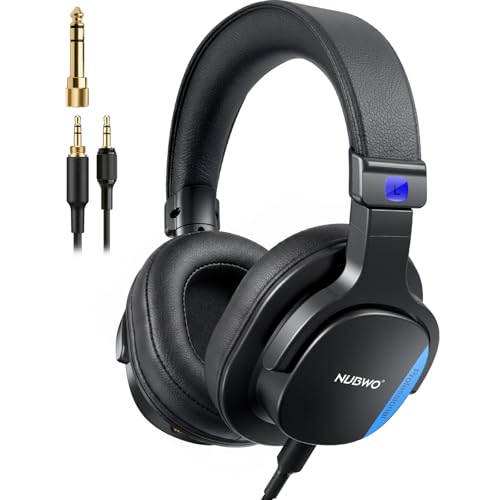 |
NUBWO HD01 Studio Headphones | Lightweight over-ear design | Adapter included | Closed-back construction | View on Amazon | Read Review |
| DJ Detail |  |
OneOdio A71 Studio Headphones | Over-ear studio design | Wired low-latency use | DJ compatibility | View on Amazon | Read Review |
| Colorful Monitor |  |
OneOdio Pink Wired Headphones | Over-ear listening | Wired connection | Distinctive pink finish | View on Amazon | Read Review |
| Wireless Flexibility |  |
OneOdio A70 Wireless Headphones | Bluetooth and wired modes | Over-ear design | DJ studio use | View on Amazon | Read Review |
More Details on Our Top Picks
-
OneOdio Wired DJ Headphones
For piano players who want over-ear coverage and a straightforward wired setup, these OneOdio headphones are a practical starting point. The DJ-oriented design suits digital pianos, keyboards, computers, and other equipment with a headphone output.
The main strengths are closed listening, broad device compatibility, and a design aimed at monitoring music rather than casual background listening. The limitation is that the listing provides few technical details, so you cannot confirm driver size or included accessories before purchase.
- Brand:OneOdio
- Headphone Type:Over-ear
- Connection Type:Wired
- Color:Black
- Additional Feature:DJ-style monitoring
- Additional Feature:Hi-Res audio claim
- Additional Feature:Computer compatibility
-
Philips Studio Headphones With Adapter
Choose this Philips model if your piano or recording equipment uses a 6.3 mm headphone jack. The included adapter makes it easier to connect with keyboards, studio gear, computers, and audio interfaces without buying an extra accessory.
Its strengths are studio monitoring, wired reliability, and support for recording or podcast work in addition to piano practice. The tradeoff is a less flexible setup for mobile listening, since the cable and full-size adapter favor stationary equipment.
- Brand:Philips
- Headphone Type:Over-ear
- Connection Type:Wired
- Adapter Included:6.3 mm adapter
- Additional Feature:Podcast monitoring
- Additional Feature:Recording compatibility
- Additional Feature:Keyboard compatibility
-
Wired Studio Monitor Headphones
This pair fits piano players who also work with mixing and DJ equipment, especially when an uncomplicated wired connection matters more than wireless features. Its over-ear format is suited to focused practice and monitoring recorded parts.
You get a studio-monitoring design, over-ear coverage, and a use case that extends from piano to mixing work. The honest drawback is the sparse product information, which leaves the driver size, adapter contents, and finish unspecified.
- Headphone Type:Over-ear
- Connection Type:Wired
- Additional Feature:Studio monitoring
- Additional Feature:DJ compatibility
- Additional Feature:Recording use
-
Sony ZX110 On-Ear Headphones
The Sony MDR-ZX110 makes sense for casual piano practice and everyday computer listening, particularly if you prefer a lighter on-ear style. Its compact format is easier to store than many large studio headphones.
A wired connection keeps piano monitoring free from Bluetooth delay, while the 30 mm drivers suit basic practice and playback. The limitation is the on-ear fit, which generally provides less isolation and a less spacious presentation than closed-back over-ear models.
- Brand:Sony
- Headphone Type:On-ear
- Driver Size:30 mm
- Connection Type:Wired
- Color:Black
- Additional Feature:Foldable design
- Additional Feature:Swivel earcups
- Additional Feature:Computer compatibility
-
Sony MDR7506 Studio Headphones
For piano recording and detailed monitoring, the Sony MDR-7506 is a strong fit with its professional studio focus. The closed-back design helps you monitor a keyboard or recording without adding speaker sound to nearby microphones.
Its 40 mm drivers, folding construction, and supplied 1/4-inch adapter support studio work across keyboards, interfaces, and mixers. The limitation is a more utilitarian presentation and fit, so it may feel less relaxed than consumer headphones during long casual sessions.
- Brand:Sony
- Headphone Type:Over-ear
- Driver Size:40 mm
- Connection Type:Wired
- Adapter Included:1/4-inch adapter
- Color:Black
- Additional Feature:Closed-back construction
- Additional Feature:Folding design
- Additional Feature:Studio recording use
-
Audio-Technica ATH-M20x Headphones
The ATH-M20x is aimed at piano players who want focused closed-back monitoring for practice, recording, and basic mixing. Its design keeps the listening experience centered on the keyboard rather than the surrounding room.
The 40 mm drivers, wired connection, and included 1/4-inch adapter make it suitable for digital pianos, interfaces, and mixers. Its limitation is that the fixed cable offers less convenience for people who regularly switch between desk, piano, and portable listening.
- Brand:Audio-Technica
- Headphone Type:Over-ear
- Driver Size:40 mm
- Connection Type:Wired
- Adapter Included:1/4-inch adapter
- Color:Black
- Additional Feature:Circumaural earcups
- Additional Feature:Swiveling earcups
- Additional Feature:Studio monitoring
-
NUBWO HD01 Studio Headphones
NUBWO’s HD01 suits piano players who connect to amplifiers, mixers, and recording equipment as well as keyboards. The included adapter is especially useful when one setup uses a standard 3.5 mm output and another uses a 1/4-inch jack.
You get closed-back over-ear listening, a lightweight design, and wired compatibility for low-latency piano monitoring. The main limitation is the lack of a published driver size in the supplied listing, making direct technical comparisons harder.
- Brand:NUBWO
- Headphone Type:Over-ear
- Connection Type:Wired
- Adapter Included:1/4-inch to 3.5 mm
- Additional Feature:Hi-Res audio claim
- Additional Feature:Guitar compatibility
- Additional Feature:Mixer compatibility
-
OneOdio A71 Studio Headphones
The OneOdio A71 is a sensible choice for piano practice with studio ambitions, especially if you also work with DJ software or recorded tracks. Its over-ear design supports focused listening, while the wired format avoids the delay that can make Bluetooth awkward for live playing.
The standout qualities are Hi-Res audio support, studio-oriented construction, and broad use across DJ and mixing setups. The limitation is the lack of wireless operation, so this pair is better for a fixed piano or desk setup than commuting.
- Brand:OneOdio
- Headphone Type:Over-ear
- Driver Size:40 mm
- Connection Type:Wired
- Color:Black
- Additional Feature:Hi-Res audio claim
- Additional Feature:Mixing compatibility
- Additional Feature:Closed-back listening
-
OneOdio Pink Wired Headphones
This pink OneOdio model offers the same kind of wired over-ear setup that works well for digital piano practice, computer recording, and keyboard use. It is a practical pick if appearance matters and black studio gear feels a little too solemn.
The strengths include DJ-style monitoring, broad wired compatibility, and an over-ear format suited to concentrated listening. As with the black version, the listing does not provide enough technical information to confirm driver size or included adapters.
- Brand:OneOdio
- Headphone Type:Over-ear
- Connection Type:Wired
- Color:Pink
- Additional Feature:DJ-style monitoring
- Additional Feature:Hi-Res audio claim
- Additional Feature:Keyboard compatibility
-
OneOdio A70 Wireless Headphones
The A70 is the most flexible option here for listeners who want Bluetooth convenience alongside a wired piano connection. Use the wired mode for playing, where avoiding wireless latency matters, then switch to Bluetooth for music, podcasts, or general computer use.
Its over-ear design, Hi-Res wired positioning, and dual connection approach suit a mixed practice and entertainment routine. The limitation is that Bluetooth should not be the first choice for precise live piano monitoring, since even small delays can disrupt timing.
- Brand:OneOdio
- Headphone Type:Over-ear
- Driver Size:40 mm
- Connection Type:Bluetooth and wired
- Color:Black
- Additional Feature:Hi-Res wired audio
- Additional Feature:DJ compatibility
- Additional Feature:Computer listening
Frequently Asked Questions
Are Open-Back Headphones Better For Piano?
Open-back headphones often sound more natural and spacious, which can make an electronic piano feel closer to an acoustic instrument. They are a strong choice for quiet rooms where sound leakage is not a concern. Closed-back headphones are better for shared spaces, recording, or situations that require more isolation. The right design depends on your room and listening habits, not just the piano itself.
Do Piano Headphones Need To Be Wired?
Wired headphones are usually the best choice because they provide near-zero latency and do not require charging. They also connect directly to most digital pianos with a suitable plug or adapter. Wireless models can work for casual listening, but Bluetooth delay may make notes feel late. If you use a wireless model, confirm that both the piano and headphones support a low-latency connection.
What Impedance Is Best For A Digital Piano?
Headphones rated between 16 and 80 ohms are generally a practical match for digital pianos and keyboards. Lower-impedance models usually reach a useful volume more easily from built-in headphone outputs. High-impedance headphones are not automatically superior, but they may sound quiet without a suitable amplifier. Check the piano’s specifications and choose a model with adequate sensitivity, commonly listed in decibels per milliwatt.
Can Headphones Damage Hearing During Piano Practice?
Any headphones can contribute to hearing damage if the volume is too high or practice sessions run too long. Keep the level comfortable, follow the 60/60 guideline as a general reference, and take regular breaks during extended playing. If you need to raise the volume to overcome outside noise, choose headphones with better isolation rather than turning them up further. Ringing, muffled hearing, or discomfort means you should stop and lower future listening levels.
Are Studio Headphones Good For Learning Piano?
Studio headphones can be an excellent choice because many models emphasize accurate sound instead of heavy bass or sharp treble. That balance helps you hear note color, sustain, pedal noise, and uneven playing more clearly. Look for a comfortable wired model with a suitable impedance and a cable long enough for your setup. A 1.2-meter cable may work at a desk, while 2 to 3 meters offers more freedom beside a digital piano.