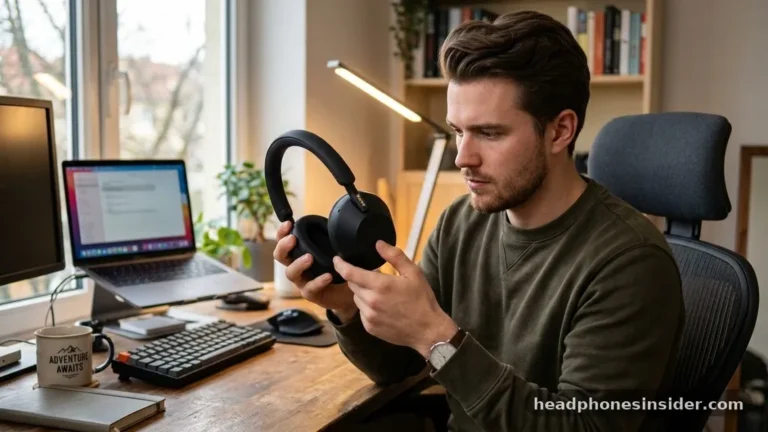
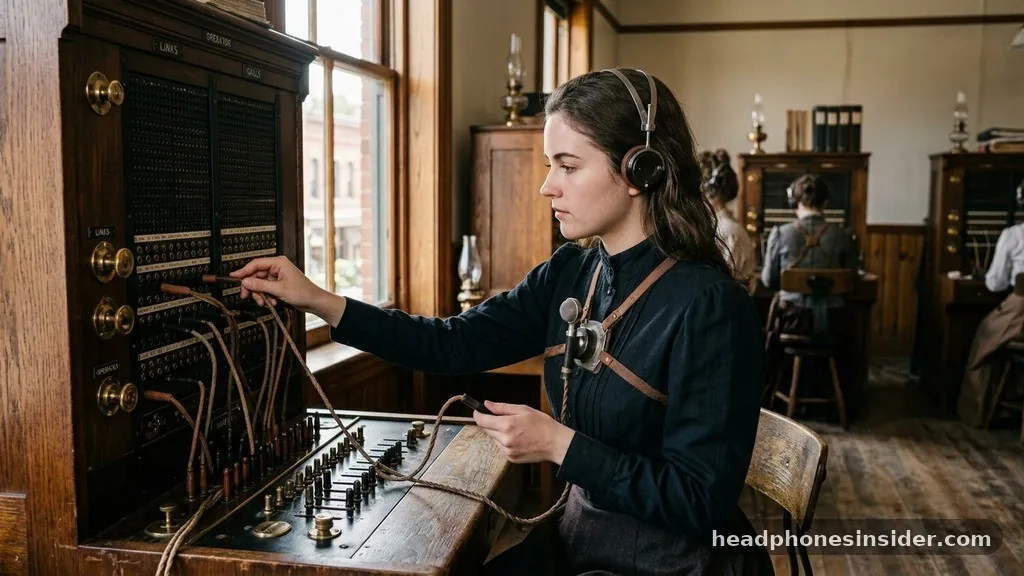
The story of who invented headphones is not a simple tale of a single lightbulb moment, but rather a complex evolution of engineering necessity. While most people associate the personal listening experience with modern wireless devices, the roots of this technology stretch back to the late 19th century.
Long before the sleek earbuds we see today, early pioneers were tinkering with rudimentary designs to help telephone operators and naval officers receive clearer audio signals. Understanding the progression from heavy, cumbersome headsets to the lightweight, high-fidelity gear we rely on today requires us to look at the intersection of communication, military demand, and the eventual rise of the consumer music industry.
The Early Days of Telephone Operators
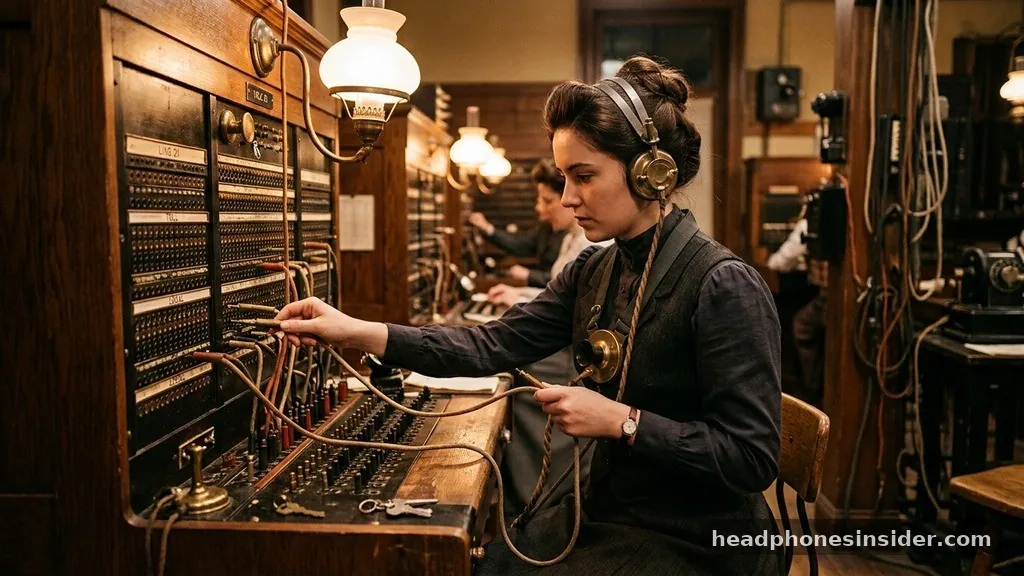
The very first iteration of what we might recognize as a headphone was not designed for entertainment, but for the grueling work of telephone switchboard operators. In the 1880s and 1890s, operators in the United States and Europe needed a way to keep their hands free to manipulate patch cables while simultaneously listening to callers. These early devices were not the comfortable, padded accessories we know; they were essentially single-ear receivers held against the ear by a metal rod or a heavy headband.
These devices were often uncomfortable, sometimes weighing over ten pounds, and were designed purely for utility. The sound quality was mediocre at best, prone to static and interference, yet they revolutionized the way communication was handled.
By allowing operators to hear both sides of a conversation without holding a receiver, these crude headsets paved the way for the concept of hands-free communication. This period established the fundamental relationship between the ear and the transducer—the mechanical component that converts electrical signals into audible sound waves—which remains the heart of every modern headphone.
Nathaniel Baldwin and the Kitchen Table Invention
When discussing who invented headphones in a more recognizable, modern form, the name Nathaniel Baldwin is almost always front and center. A self-taught engineer living in Utah during the early 1900s, Baldwin was an avid tinkerer who believed he could improve upon the existing telephone receivers of his day.
According to historical accounts, he was frustrated by the poor audio quality while attending services at a local Mormon tabernacle. He went home to his kitchen table, where he experimented with different materials to amplify sound.
Baldwin eventually developed a prototype of an acoustic headset that was far more efficient than anything else available at the time. He sent a pair to the United States Navy, which was initially skeptical of the device built by a man in his kitchen. However, after the Navy tested them, they found the audio clarity to be vastly superior for radio communications.
This led to a massive order for his headsets, cementing Baldwin’s place in the history headphones timeline. Despite his success, Baldwin famously failed to patent his invention, missing out on the massive potential wealth that would have followed the commercialization of his design. You can learn more about the technical evolution of early communication devices through the Smithsonian Institution’s archives on audio history.
The Rise of High-Fidelity Music Listening
It was not until the 1950s that headphones transitioned from professional communication tools to consumer electronics designed for pleasure. The pivotal figure here is John C. Koss, who founded the Koss Corporation.
Before Koss, the idea that someone would want to sit at home and listen to music through a headset was largely unheard of; most people listened through floor-standing speakers. Koss recognized that the high-fidelity revolution was coming and that people would eventually want an immersive, personal experience.
In 1958, the Koss SP/3 stereophone hit the market, and it was a revelation. Unlike the military-grade hardware that preceded it, the SP/3 was designed specifically for music reproduction. It featured foam-padded ear cups that provided a degree of comfort and isolation that was previously impossible.
This was the moment the headphone became a piece of consumer lifestyle equipment. People could suddenly listen to their favorite jazz or classical records without disturbing others in the room, creating a private soundstage that felt intimate and expansive. This shift moved the industry away from the telephone switchboard and into the living room, setting the stage for the massive market we see today.
Portability and the Walkman Revolution

If the 1950s brought high fidelity to the living room, the late 1970s and 1980s brought that experience into the streets. The release of the portable cassette player fundamentally changed the way headphones were used.
Suddenly, the bulky, heavy headsets of the past were replaced by lightweight, supra-aural (on-ear) models that could be easily carried in a bag or worn around the neck. This was the birth of the “on-the-go” listening culture.
The impact of this shift cannot be overstated. It allowed individuals to curate their own environment, turning a commute or a walk through the city into a personalized cinematic experience.
This era also saw the miniaturization of drivers and the refinement of materials like neodymium magnets, which allowed for smaller, lighter, and more powerful sound reproduction. The portable nature of these devices meant that headphones were no longer just a piece of stationary equipment; they became a fashion accessory and a permanent fixture of daily life for millions of people.
| Era | Primary Use | Form Factor |
|---|---|---|
| 1890s | Telephone Switchboard | Heavy, single-sided, metal headband |
| 1910s | Military Radio | Dual-ear, rudimentary acoustic drivers |
| 1950s | High-Fidelity Home Music | Padded, stereo, over-ear cups |
| 1980s | Portable Cassette Players | Lightweight, foam-covered, foldable |
| 2010s | Wireless Streaming | Bluetooth, noise-canceling, in-ear |
Wireless Technology and the Modern Era
Today, the industry is defined by the ubiquity of Bluetooth and active noise-canceling technology. The transition from wired to wireless connections was initially met with skepticism by audiophiles who feared the loss of signal quality.
However, advancements in digital signal processing and codec efficiency have largely erased those concerns for the average listener. Modern headphones are now sophisticated computers, featuring built-in microphones, touch controls, and smart assistants that respond to voice commands.
This evolution has also seen the rise of earbuds and true wireless in-ear monitors. By placing the driver directly inside the ear canal, manufacturers have managed to provide incredible sound quality while maintaining a nearly invisible profile.
The convenience of not having a cable tethering the user to a device has made headphones an essential tool for exercise, remote work, and travel. We have moved from a time where the equipment dictated the experience to a time where the experience is seamless and integrated into every aspect of our digital lives.
Addressing Topical Gaps and Common Misconceptions
A common point of confusion involves the role of the military in headphone history. Many people assume that because the Navy bought the first large batches of Baldwin’s headsets, they were the primary inventors.
In reality, the military was the primary adopter, which provided the funding and the testing grounds that allowed the technology to mature. Another common gap in the historical narrative is the role of the university research labs in the late 1940s and 50s, which were instrumental in developing the early standards for high-fidelity stereo sound that companies like Koss would later commercialize.
- Misconception: Headphones were invented for music. Reality: They were invented for telephone operators and military radio.
- Misconception: Bluetooth headphones are a modern 2020s invention. Reality: Bluetooth headphone technology has been in development since the late 1990s.
- Misconception: Nathaniel Baldwin held the patent for modern headphones. Reality: He never patented his design, which allowed others to iterate on it freely.
- Misconception: Earbuds have always been the standard. Reality: They only became the dominant form factor after the rise of smartphones in the late 2000s.
It is also important to note that the term “headphone” itself has evolved. Originally, it referred specifically to the headband-style device.
Today, it is a catch-all term that includes earbuds, in-ear monitors, and over-ear cans. The distinction is largely one of comfort and preference, but the underlying audio principles—moving a diaphragm to create air pressure changes—remain identical to the primitive prototypes Baldwin built in his home.
Conclusion
The history of who invented headphones is a testament to human ingenuity and the constant pursuit of better communication. From the heavy, uncomfortable headsets worn by telephone operators in the 19th century to the sophisticated, noise-canceling wireless devices we use today, the journey has been marked by significant leaps in engineering and design. Nathaniel Baldwin provided the spark of innovation, while the commercial drive of companies like Koss brought the experience to the masses, and the modern era of wireless connectivity has integrated these devices into the very fabric of our daily lives.
As we look toward the future, it is clear that headphones will continue to evolve, likely incorporating even more advanced artificial intelligence and biometric integration. Whether you are a casual listener or a professional audio engineer, the legacy of these early inventors remains present in every beat of music you hear. If you are interested in exploring specific vintage models, checking out reputable electronics museums or historical databases can provide further insight into how these amazing tools have shaped our world.